
How Wrenfordia Structures and Presents Information
An overview of the platform's purpose, its classification approach, and the type of information it makes available for review.
A Purpose-Built Organisation Layer
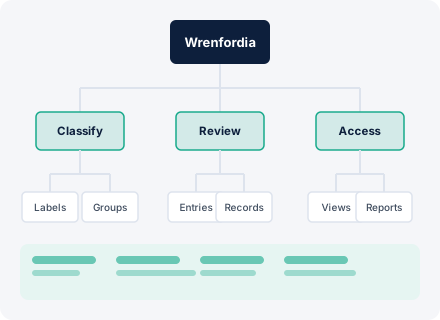
Wrenfordia was developed to address a specific problem: large volumes of digital information are difficult to navigate without a consistent organisational framework. The system applies that framework — classifying items, assigning them to defined categories, and surfacing them in a format suited to careful review.
The platform is not a search engine, and it is not a document repository in the conventional sense. It is more precisely described as a classification and presentation layer: a structured interface through which information is made accessible in an ordered, predictable way.
Users interacting with Wrenfordia are engaging with information that has already passed through the organisation layer. What they see has been sorted and labelled, which means the structure of what they encounter reflects deliberate classification decisions rather than arbitrary sequence.
The Range of Available Information
Wrenfordia's structured environment covers several distinct areas of information. Each area is maintained within its own classification layer.
Categorised Records
The primary layer of the system consists of records that have been assigned to a specific category. Within each category, records are presented in a consistent format, making them easy to compare and review side by side.
Annotated Entries
Many entries within the system include annotation — contextual labels or descriptors that provide additional information about what an entry represents without altering its underlying content.
Cross-Referenced Items
Where information relates to more than one category, the system maintains cross-references. Users can follow these references to view related entries without losing their position within the current classification structure.
Structured Summaries
For categories that contain a large volume of entries, Wrenfordia generates structured summaries. These provide an organised overview of the category's content, helping users decide where to focus their review.
Classification Metadata
Every item carries metadata describing how it was classified — the category it belongs to, any sub-classification labels applied, and the date on which the entry was organised. This transparency helps users interpret what they are reviewing.
Access Records
The system maintains a record of access activity — not linked to personal identifiers beyond what is strictly necessary — to support the ongoing management and organisation of the information it holds.
What to Understand Before You Proceed
Wrenfordia is an informational service. It provides access to organised information, but it does not make decisions on behalf of users, advise on specific situations, or generate conclusions from what it holds.
Users considering an access request should approach the platform with an understanding of this scope. The system will present what it has, organised clearly — but it will not interpret that information for you or provide a recommended course of action.
Access is granted on a per-request basis. The team reviews each enquiry before access is extended, and may seek clarification where the nature of the request is unclear. There is no implication that a request will automatically result in full access to all available information.
Important distinction
The structure of information within Wrenfordia reflects organisational decisions, not endorsements. A classified entry is present because it has been organised — not because the platform has verified its accuracy or completeness.
Review the system overview
Familiarise yourself with how Wrenfordia organises information and what kinds of content fall within each classification category.
Identify what you need
Consider which category of information is relevant to your purpose. The more precisely you can describe your need, the more useful the access process will be.
Submit a structured enquiry
Use the enquiries page to submit your request. Provide as much relevant context as possible to help the team understand what you are looking for.
Await the team's response
The Wrenfordia team will review your enquiry and respond with information about what the system can provide. Further clarification may be requested where necessary.
Frequently Asked Questions
What does Wrenfordia actually organise?
Wrenfordia organises digital information — records, entries, and associated metadata — within a consistent classification framework. The specific content held by the platform depends on what has been submitted or integrated into the system. The platform's role is to apply structure to that content and make it available for review in a clear, navigable format.
Is the information in Wrenfordia accurate and up to date?
Wrenfordia applies a classification and organisation layer to information it holds, but it does not independently verify the accuracy of every entry. The platform makes no claim that all information it presents has been externally validated. Users should treat what they review as organised information and conduct their own assessment of its reliability where decisions depend on it.
How is access to the system controlled?
Access to Wrenfordia is handled through an enquiry process. Users submit a request describing their need, and the team reviews each submission before extending access. This approach allows the team to match the scope of access to the nature of the enquiry and to seek clarification where needed. Broad or unrestricted access is not automatically granted.
Can I request that specific information be classified differently?
Classification decisions are made by the platform's organisation team according to the framework in use at the time. If you believe a classification is clearly inaccurate or misleading, you may raise this through the enquiries page. The team will consider the matter and respond, but reclassification is not guaranteed and is subject to the team's assessment of the classification framework.
Does Wrenfordia provide advice or recommendations?
No. Wrenfordia is an information-organisation system, not an advisory service. It presents structured information for review — it does not interpret that information, offer conclusions, or make recommendations based on what it holds. Users are responsible for drawing their own conclusions from what the system provides.
What the System Does Not Claim to Do
It is important to be clear about where Wrenfordia's capabilities end. The platform does not claim to hold all possible information on any subject. It does not claim that its classifications are exhaustive, universally agreed upon, or free from error. It does not operate as a regulatory authority, a verification service, or a source of professional advice in any field.
The system is built to be useful within a defined and transparent scope. Users who understand that scope will get more from the platform than those who approach it expecting something it was not designed to provide.
Honest presentation
Where the system presents information, that presentation reflects the classification framework applied — not a claim about what is true, complete, or verified. Wrenfordia is a tool for organised review, not a substitute for independent verification.
See what Wrenfordia offers in practice
The capabilities page describes the specific tools and functions available within the platform, including how structured review works in detail.